What is IoT and what does it mean for your business?
We’re going to explore how IoT is transforming industries across the UK, and how...








With businesses increasingly working from more geographically dispersed areas, wide area networks (WANs) are being relied on to ensure seamless communication, data transfer, and provide easy access to central applications across multiple sites.
However, as businesses become ever more data-reliant and require the uninterrupted flow of information over a diverse, multisite network, traditional WAN architectures are facing challenges to remain effective and efficient. Software-defined Wide Area Networks (SD-WAN) have transformed systems in recent years to create more intelligent and operationally effective networks. We’re going to take you through the main features of both traditional WAN and SD-WAN and explore how SD-WAN can improve your business.
So keep reading to learn more, or get in touch with the experts at Elite Group today for more personalised advice and product recommendations for your enterprise.
A Wide Area Network (WAN) is a network that works across large geographical areas, connecting local area networks (LANs) and individual devices. Working like a road network for the internet, WANs enable data to travel over large distances, connecting different local networks (like offices in different cities). WANs create an environment for businesses to communicate and share resources across local branches, remote locations and data centres. These networks are now under increased pressure due to the rise of remote working, and the need to connect networks over a much wider footprint.
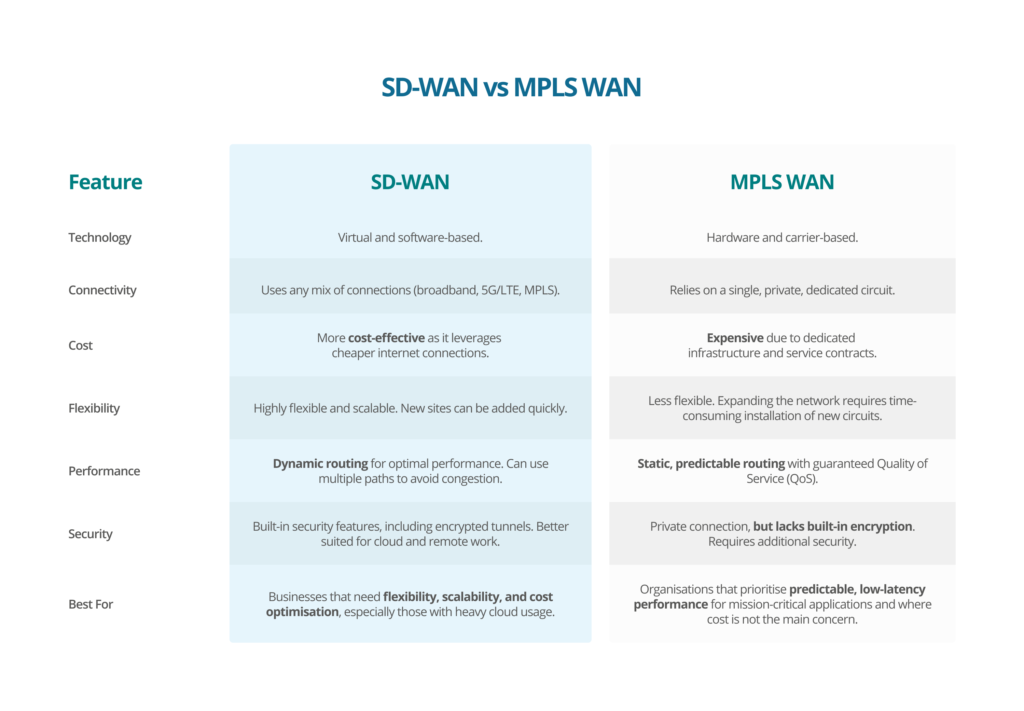
Traditional WANs have been the spine of network connectivity for several decades, relying on routers and leased lines to connect local branches to central systems and data centres, so employees can work effectively. Historically, because of their reliance on fixed hardware, WANs have been expensive to set up and inflexible when it comes to scalability, meaning businesses have struggled to adapt networks in line with growth. One of the main problems with traditional WANs is that, because they use fixed routes over leased lines to establish a connection between locations, they lack intelligent traffic optimisation.

SD-WAN leverages software-defined networking (SDN) and application-aware routing
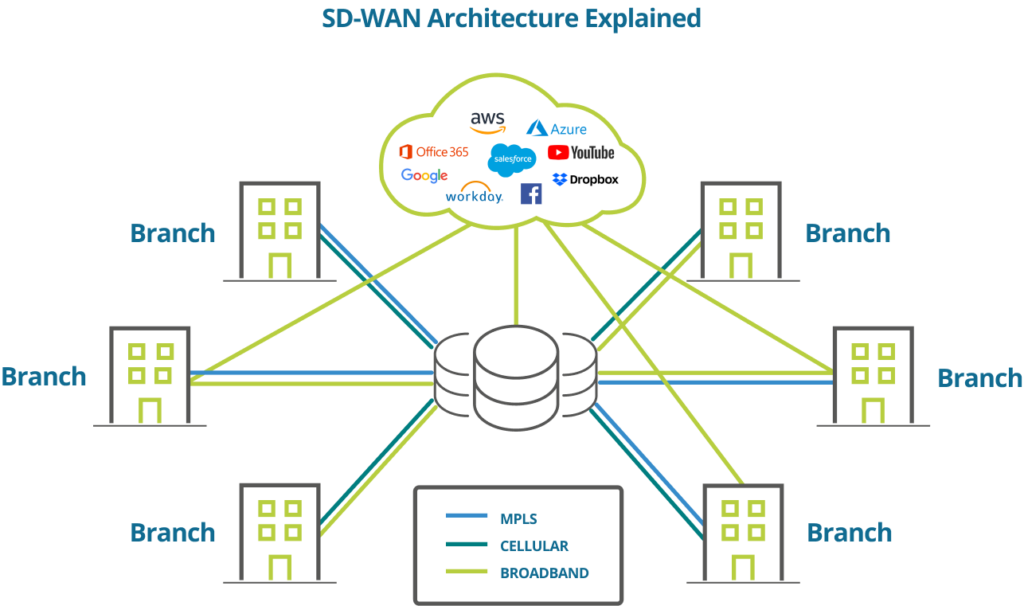
to optimise wide area networks, enabling centralised management and dynamic controls over network infrastructure and traffic. SD-WAN, essentially, creates a smart traffic management system for network data that operates over multiple network connections, using algorithms to constantly monitor network traffic and automatically adjust the flow of data over different routes, based on real-time use. This allows businesses to prioritise critical applications and constantly optimise bandwidth usage to ensure networks operate as efficiently as possible at all times.
Unlike Traditional WANs, SD-WAN uses multiple network links, rather than single leased lines or routers. This includes broadband, MPLS and 4G/5G to connect Infrastructure as a Service platforms, branch offices, and data centres, creating a hybrid network that increases resiliency across the system. If one link fails, SD-WAN automatically reroutes traffic over a different path, ensuring connectivity isn’t interrupted. SD-WAN also provides a centralised management system, allowing network administrators to monitor network performance, make updates and alter configurations from one place.
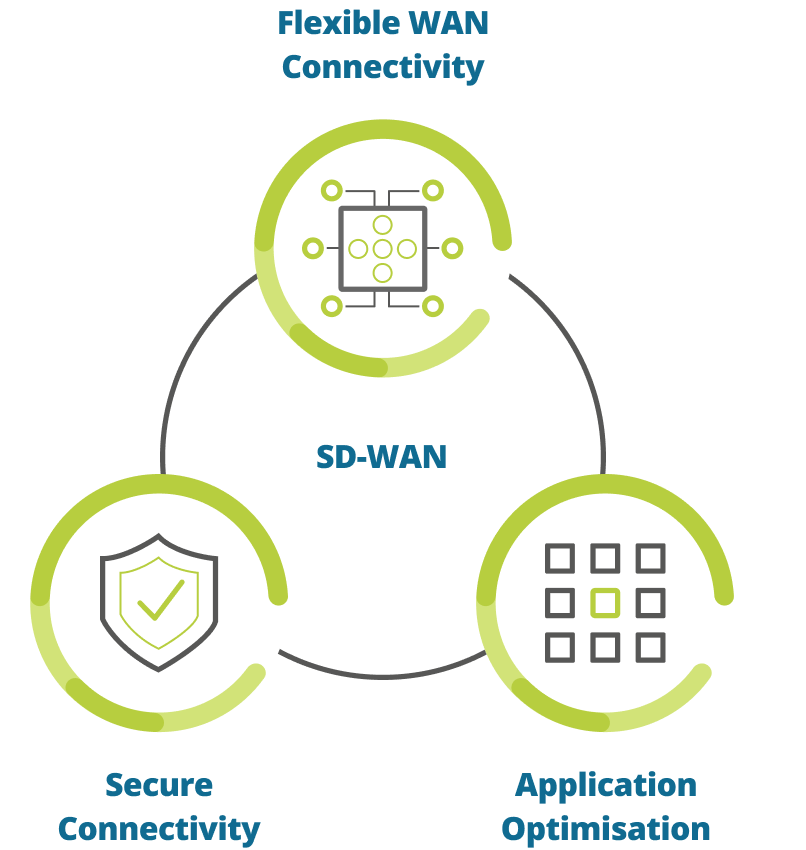
The innovative features of SD-WAN enhance the performance, flexibility and security of a diverse network. Here, we look at the main features that can help businesses transform data management and network administration.
Traditional WAN infrastructure can be complex to manage because it requires oversight of multiple sites and multiple systems that, while connected, often operate in isolation. Instead, SD-WANs simplify management by centralising network controls into a single dashboard and user-friendly interface that can be configured and monitored centrally.
SD-WAN introduces a major shift in how wide area networking operates, offering a more agile, cost-effective and secure environment than that offered by traditional WANs. Embracing the advantages of SD-WAN means businesses and organisations can enhance network performance while more quickly scaling over multiple locations, without complicating management. With innovative features, such as intelligent traffic routing, dynamic path selection, application-aware network management and enhanced security and performance, SD-WAN has revolutionised how dispersed networks operate.
If you’re ready to improve your connectivity, improve network speeds and streamline operations, SD-WAN is the solution for your business. You can rely on the expert guidance of our Elite Group IT specialists, who will work with you to identify your network requirements before exploring the best SD-WAN solution for the job. As a business, we are proud to hold a vast range of partnerships and accreditations with the biggest brands in the business and our team is highly certified with many years of combined industry experience. If you’re looking to optimise your business operations with an SD-WAN solution, trust the experts at Elite Group. Call us today on 0344 875 8880 or fill in our contact form and one of our specialists will be in touch soon.

Explore Elite Group's latest industry updates, insights, and practical guidance, designed to help your business make better technology decisions.